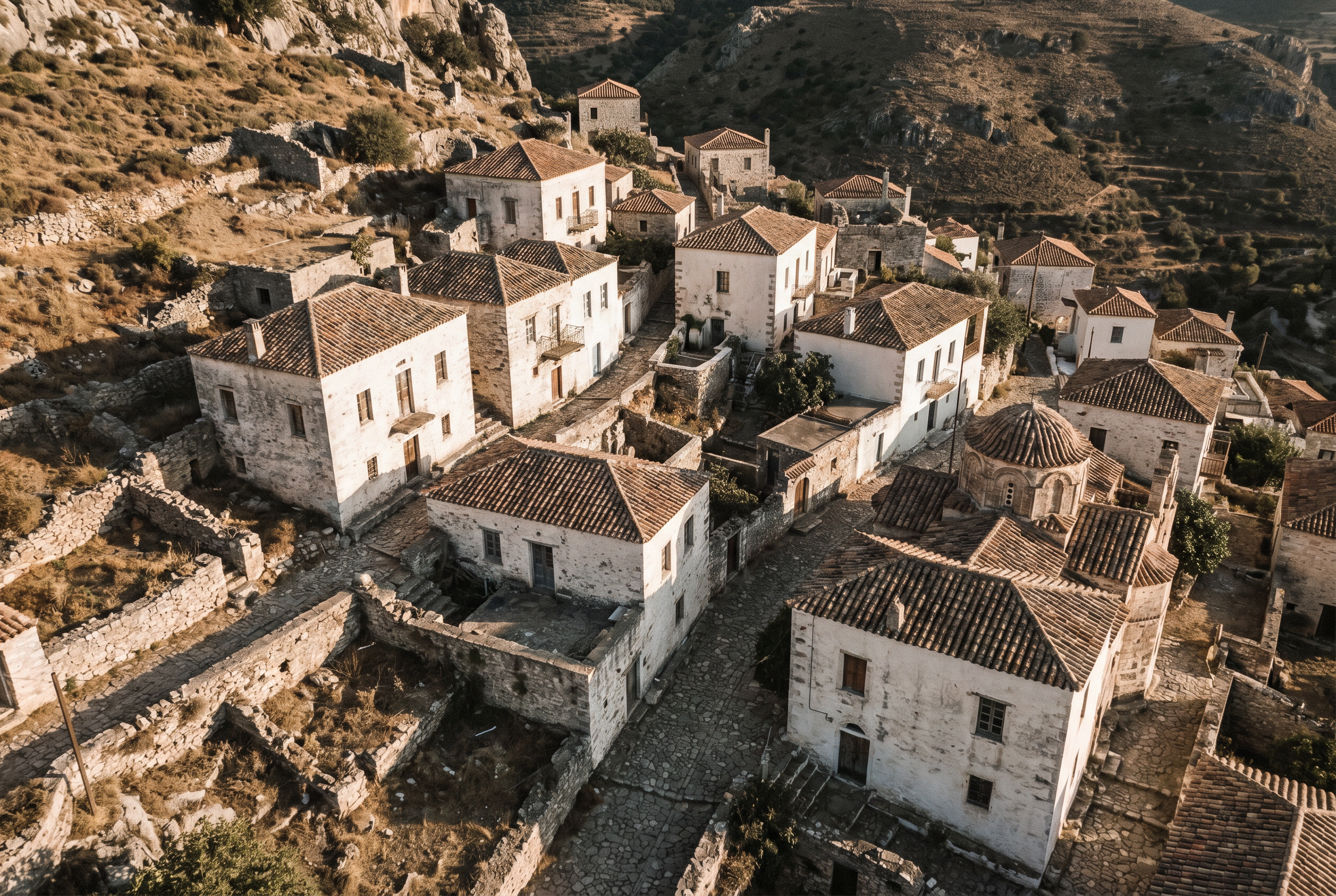
Crete is the largest island in Greece, and consistently the most-searched location for foreign property buyers. It offers a year-round community, two international airports, excellent healthcare infrastructure, and a landscape that ranges from snow-capped mountains to tropical beaches.
But buying property in Crete is not like buying an apartment in Athens or a villa in Mykonos. The island has its own distinct property market, its own architectural traditions, and its own specific set of challenges for foreign buyers.
This is not an agent's sales pitch. This is a practical, honest guide to what you are actually buying when you invest in Cretan real estate.
The Three Types of Cretan Property
When foreign buyers look at Crete, they are usually looking at one of three distinct property types. Each comes with its own set of condition issues.
1. The Old Stone Village House (The Dream)
This is the classic expat dream: a €60,000 stone ruin in a traditional village like Vamos or Gavalochori, waiting to be restored. The walls are half a metre thick, the arches are beautiful, and the history is palpable.
The Reality Check: Traditional Cretan stone houses were built without damp-proof courses or modern foundations. They absorb moisture from the ground. If they have been empty for years, the roof timbers are likely rotten. The beautiful stone walls often hide severe structural degradation behind layers of old plaster. Renovation costs on these properties frequently exceed the purchase price by 200%.
2. The 1990s/2000s Concrete Villa (The Compromise)
Built during the boom years before the Greek financial crisis, these villas are scattered across the hillsides of the Apokoronas region (Chania) and Elounda (Lasithi). They offer modern layouts, swimming pools, and sea views.
The Reality Check: Many of these were built quickly and cheaply. The concrete frames are generally solid, but the finishing work is often poor. The biggest issue with this era of property is illegal extensions (αυθαίρετα). Basements were converted into bedrooms, and pergolas were enclosed to make sunrooms. If these have not been legally regularised, you cannot buy the property.
3. The New Build Off-Plan (The Investment)
Modern, minimalist, energy-efficient villas built specifically for the foreign market and Golden Visa investors. They look spectacular in the 3D renders.
The Reality Check: Buying off-plan in Greece requires immense trust in the developer. Delays are common. More importantly, the finish quality can vary wildly from the glossy brochure. Snagging issues—poorly fitted windows, incorrect falls on wet room floors, cheap fixtures substituted for premium ones—are rampant.
The Specific Challenges of the Cretan Market
The Topography and Access
Crete is incredibly mountainous. A villa might have a spectacular view, but how do you get to it? Many properties are accessed via steep, unpaved dirt tracks that wash out during the heavy winter rains. If you are buying a property for year-round living, you need to know if the road is passable in January, not just in July.
Water Supply and Drainage
Outside the main towns (Chania, Rethymno, Heraklion, Agios Nikolaos), properties often rely on agricultural water supplies or private boreholes. Mains sewage is rare in villages; most properties use septic tanks (βόθρος). You need to know exactly where your water comes from, who controls it, and where your waste goes.
The Winter Reality
Crete is not a year-round summer paradise. The winters are short but intensely wet and windy, especially on the north coast. A property that feels breezy and cool in August can feel damp, freezing, and miserable in February if it lacks proper insulation and central heating. Air conditioning units alone are rarely enough for a Cretan winter.
Buying in Crete remotely?
Do not rely on the agent's video tour. We visit the property, check the access, look for damp, inspect the boundaries, and give you the honest reality of the house before you commit.
Book a Condition ReportThe Golden Rule for Crete
Never buy a property in Crete without seeing it in person, or having an independent representative see it for you. The island is vast, the microclimates vary wildly from village to village, and the condition of the housing stock is incredibly inconsistent.
Crete is a spectacular place to live. But the difference between a dream home and a money pit is entirely dependent on knowing exactly what you are buying before you sign the contract.